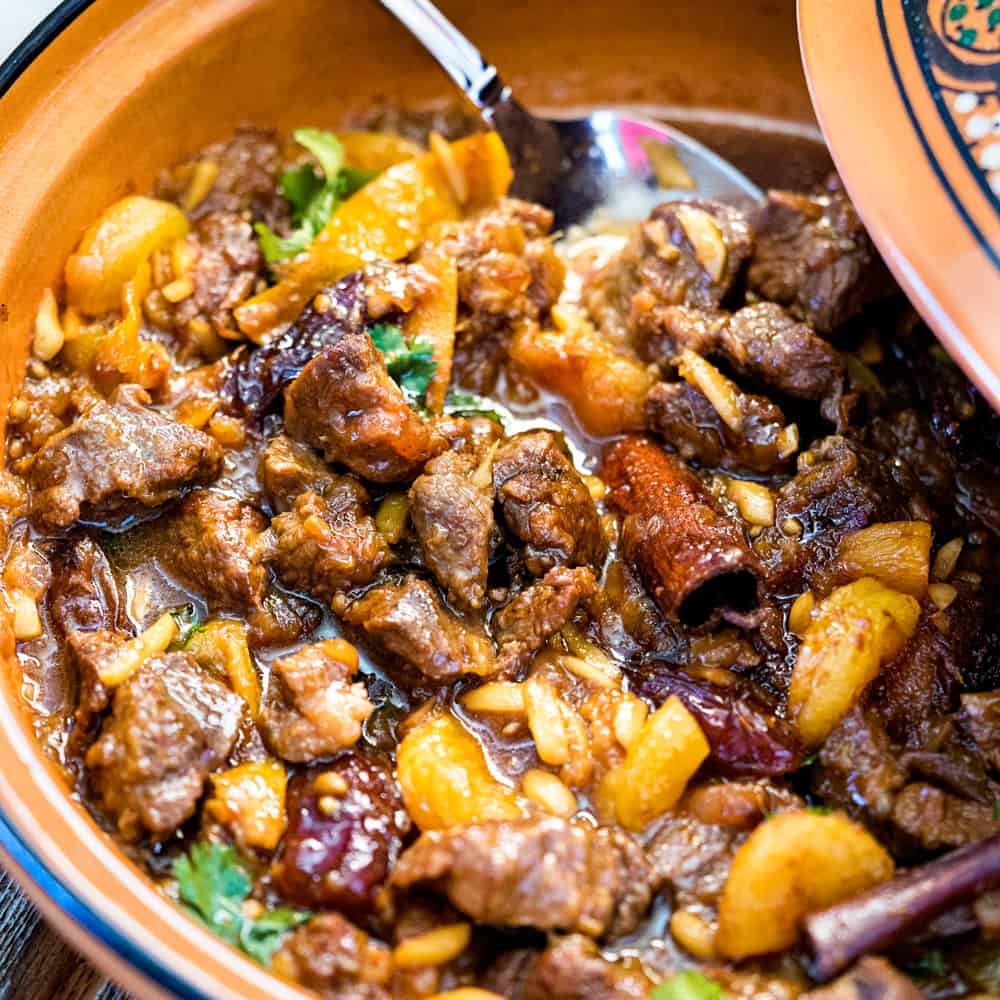
Tajine, also known as tagine, refers both to the rich Moroccan stews and the cooking vessel used to make them. When referring to the cooking vessel, it is a round and shallow, clay or ceramic casserole with a tall, pointy, conical lid.
The same lid fits into the base, so the steam condenses on its interior and drops back into the stew without any waste of flavors and moisture. The pots are ideal for slow cooking over embers or on a stove, resulting in buttery, tender vegetables and meat that falls off the bone.
Tajines can be glazed or unglazed – the unglazed ones are earthier and darken over time, while the glazed ones are recommended for people who cook infrequently. There are also serving tajines, which are usually decorated and lighter than the other tajines, but they’re not resistant to heat.
In the area of Rif Mountains, there’s tagra, an unglazed tajine with little clay handles and without a lid. A Berber tajine is known as chalhaoui, and it has a rounded, dome-shaped lid instead of the conical one. Tajines show Moroccan cuisine’s affinity for combining different textures and mixing flavors, such as a well-balanced blend of savory and sweet, for example, chicken with tomato and almonds, and veal cuts with stewed, sliced pears.
Baby artichokes, spring peas, and various nuts such as almonds or pistachios are a common ingredient in tajines. These dishes are often accompanied by couscous, steamed rice, or fresh, hot bread, and the varieties are virtually limitless – from seafood tajines with mussels and tomato sauce, to lamb tajines with vegetables such as onions, carrots, potatoes, and olives, fruits such as apricots and raisins, and lots of spices such as red and black pepper, cumin, saffron, and turmeric, tajines are a national dish full of creativity and flavour.
The various spices present in this recipe work together, bringing a subtle boost of flavours while the sweetness of the dried fruits brings comfort and delicacy.
Don’t forget to top the tagine with fresh coriander; it tastes even better with it!
Servings 6
INGREDIENTS
- 1.2 kg lamb or beef neck fillets (or any type of stewing meat)
- 1 teaspoon ground coriander
- 1 teaspoon ground cumin
- 1 teaspoon ground turmeric
- 1 teaspoon ground ginger
- 1 teaspoon salt
- ½ teaspoon smoked paprika
- ½ ground black pepper
- ¼ teaspoon cayenne pepper
- 2 tablespoons olive oil
- 4 onions, chopped
- 3 garlic gloves, finely chopped
- 100gr pitted dates, chopped
- 100gr dried apricots, chopped
- Fresh coriander, roughly chopped
METHOD
- In a large bowl, put all the spices, salt, pepper and meat. Toss and make sure all the pieces of meat are coated with the spices. Set aside for a few minutes.
- In a large casserole, heat the olive oil and add the onions over medium heat. Cover with a lid and leave the onions until they are soft and translucent, about 10 min. This will allow sweating the onions.
- Once you’ve sweated the onions, add the garlic and the meat. Cook for 5 to 7 min turning the meat occasionally.
- Pour a cup and half of water (320 ml) into the casserole, place the coriander bouquet on top of the meat and bring to the boil. Reduce the heat to medium-low, cover with a lid and gently simmer for 60 min.
- Place the apricots and the dates in warm water for a couple of minutes to soften them. Drain the dried fruits and place them in the casserole for about 40 min or until the meat is nicely cooked and soft. Stir occasionally.
- Adjust the seasoning, add salt if necessary. Serve hot with couscous or bread and decorate with fresh coriander and chopped apricots.
Notes
• If you find that your tagine is too thick by the time the meat is cooked, feel free to add a splash of water to your tagine.
 The CookBook